
Faster biomarker testing for lung cancer: our FAST-NGS pilot reaches Greece

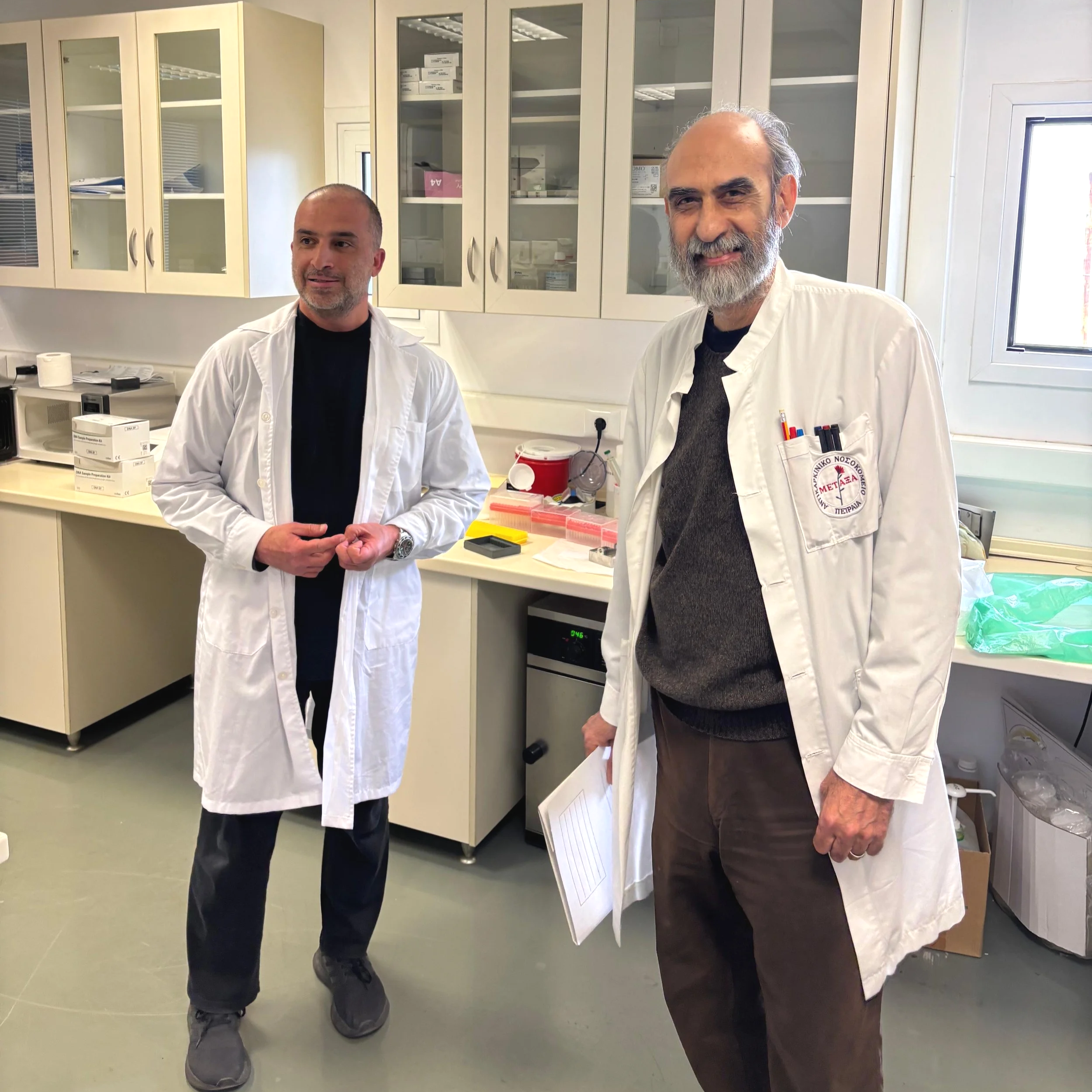
On 17 April 2026, the Lung Cancer Europe team visited Metaxa Cancer Hospital in Piraeus, one of the largest cancer hospitals in Greece, alongside partners Thermo Fisher Scientific and ANTISEL. The visit marks a significant milestone in our FAST-NGS pilot: a project to bring faster, in-house biomarker testing directly to where people with lung cancer are treated.
The team toured the hospital laboratory, met the oncology and pathology staff who will lead the implementation on the ground. They were also joined by George Kapetanakis, President of the Hellenic Cancer Federation (ELLOK). The next steps for installing the Genexus Integrated Sequencer at the hospital were discussed. The first test is expected by late spring 2026.
What is biomarker testing and why does it matter for lung cancer?
When someone is diagnosed with lung cancer, one of the most important early steps is biomarker testing. This is a laboratory analysis of the tumour that identifies the specific genetic mutations driving the cancer. The results tell clinicians which treatment is most likely to work - matching the right targeted therapy to the right person.
Without biomarker testing, treatment decisions are made without the full picture. And in lung cancer, where different mutations respond to very different treatments, that gap can have serious consequences.
The problem is that in many parts of Europe, biomarker testing takes too long. Samples are often sent to external laboratories, adding days or even weeks to a process that should be fast. For people with lung cancer, that wait is not just frustrating. It delays treatment, increases anxiety, and in some cases narrows the window for the most effective therapy.
According to the Lung Cancer Europe Charter 2026-2030, people affected by lung cancer should have access to state-of-the-art diagnostics, including biomarker testing, to support clear diagnosis and the right treatment decisions. Right now, too many people across Europe do not have that access.
What is the FAST-NGS pilot?
FAST-NGS stands for Faster Analysis of Sequencing Turnaround using Next-Generation Sequencing. The pilot is a collaboration between Lung Cancer Europe and Thermo Fisher Scientific, using the Genexus Integrated Sequencer to bring next-generation sequencing directly into hospitals.
The project will compare turnaround times between the current standard send-out biomarker testing pathway and in-house testing using the Genexus system. The goal is to demonstrate that bringing diagnostics closer to the patient can reduce critical waiting times to just 24 to 48 hours, enable more patients to be matched to optimal targeted therapies, and ultimately improve outcomes.
While FAST-NGS is led by lung cancer, the approach has relevance for other cancer types where similar biomarker testing challenges exist.
Why Metaxa Cancer Hospital in Greece?

Metaxa Cancer Hospital in Piraeus, part of the Athens region, is one of the largest and most respected cancer centres in Greece. It was selected as the first pilot site because of its clinical expertise, its high volume of lung cancer patients, and the commitment of its local team to driving innovation in diagnostics.
During the April visit, the Lung Cancer Europe team and Thermo Fisher Scientific met with hospital leadership, oncology leads, pathology staff and the technical team. Together they discussed the installation of the Genexus Integrated Sequencer and the steps needed to move the pilot towards its first test.
The bigger picture: why faster testing is a patient rights issue
Access to timely biomarker testing is not just a clinical challenge. It is a question of equity.
In lower-income European countries, people can wait over 600 days for access to new medicines. Delays in biomarker testing make that gap even wider. If you cannot get tested quickly, you cannot get treated quickly. And where you live in Europe should not determine whether you get the right treatment in time.
This is why FAST-NGS matters beyond Greece. If the pilot demonstrates what we believe it can, Lung Cancer Europe will look to expand the model to other countries across Europe. We want to show that faster, in-house next-generation sequencing is not just possible in well-resourced centres. It is replicable. It is scalable. And it is urgently needed.
This work connects directly to two of Lung Cancer Europe’s five key messages:
Timely and equitable access to innovation: Breakthroughs only matter if people can benefit from them. Access to biomarker testing, trials and treatment is inconsistent and unequal across Europe.
Lung cancer must be a top policy priority: Lung cancer is the leading cause of cancer death in Europe, with 484,000 new cases and 376,000 deaths every year. Faster diagnostics are a critical part of the response.
What comes next?
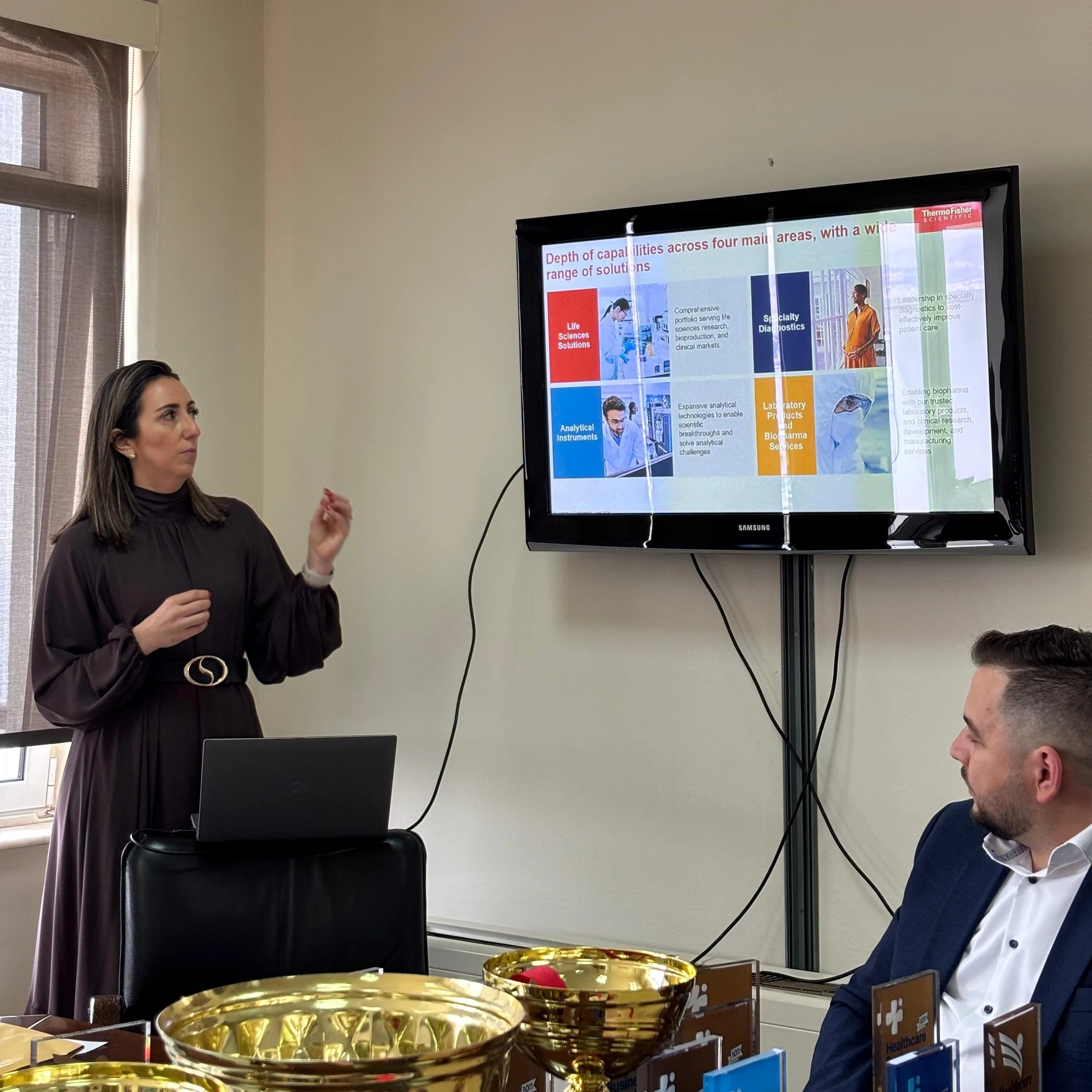
The first test at Metaxa Cancer Hospital is expected by late spring 2026. The Lung Cancer Europe team will continue to work closely with Thermo Fisher Scientific and the hospital team as the pilot moves into its delivery phase.
If your organisation is interested in putting your country forward as a future FAST-NGS site, we would love to hear from you. Please contact our team.