
Europe’s Medicine Access Crisis: What the Latest Data Means for Lung Cancer

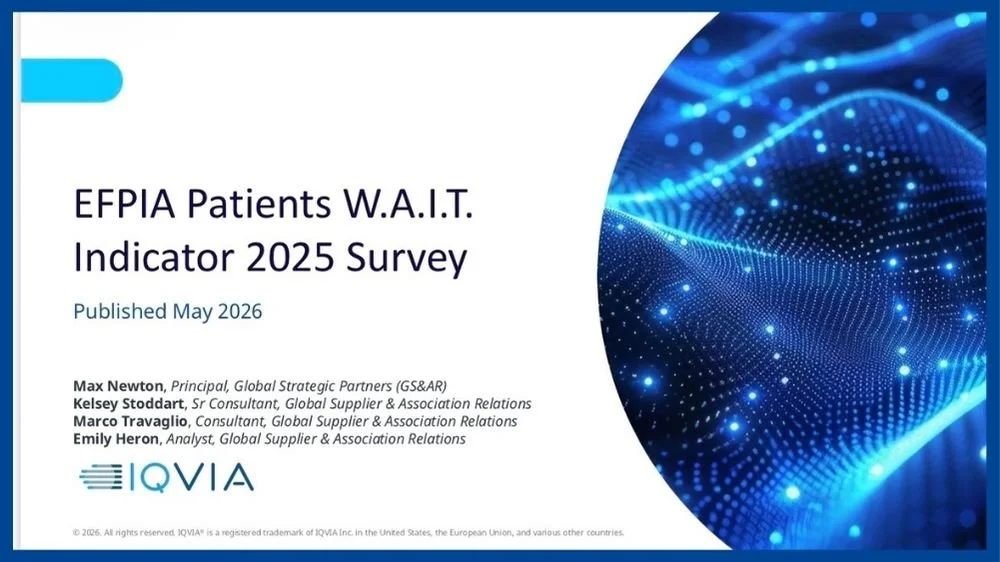
This week, EFPIA published its annual WAIT Report. It tracks how quickly medicines approved by the European Medicines Agency reach people across EU member states. The 2025 data, covering 168 medicines approved between 2021 and 2024, makes for difficult reading.
Nearly half of those medicines, 49%, are not available to people in Europe. That figure has risen from 46% in 2019. The share of medicines fully available on public reimbursement lists has fallen from 42% in 2019 to 28% in 2025. A further 17% are only available under restricted conditions, up from 6% six years ago.
The median time from European marketing authorisation to availability across the continent is 532 days. In Germany, the median wait is 56 days. In Romania, it is 1,201 days. That is a difference of more than three years, for the same medicines, approved by the same regulatory body, for people living on the same continent.
For oncology, the trend is moving in the wrong direction. The average time to availability for cancer medicines has increased year on year. EFPIA’s analysis also flags a declining trend in the number of FDA-approved medicines subsequently approved by the EMA, with a particularly steep drop since October 2025.
These are system-level statistics. But behind every number is a person whose treatment options are shaped not by what science has made possible, but by where in Europe they happen to live.
What this means for lung cancer
Lung cancer is the leading cause of cancer-related death in Europe. It is also one of the most rapidly evolving areas of oncology. New treatment options, particularly in molecularly defined subtypes, have transformed outcomes for some groups over the past decade. The pipeline continues to produce results that would have been unimaginable ten years ago.
Yet the treatments that reach people in countries with faster, better-resourced reimbursement systems are the same treatments that remain unavailable or restricted for years in others. EFPIA’s data shows that Germany had 156 of the 168 tracked medicines available. Malta had 22. The gap between the best and worst performing countries in terms of availability was 88%.
This is not a question of what medicine can offer. It is a question of whether health systems, reimbursement frameworks, and pricing negotiations are structured in a way that gets treatments to the people who need them. As Lung Cancer Europe President Debra Montague wrote in her 2025-2026 Annual Report, “it has become clearer that these advancements are not reaching everyone equally.”
What people impacted by lung cancer are telling us
Access to approved medicines is one dimension of a broader picture. Lung Cancer Europe’s own research, drawn from surveys of more than 2,000 people impacted by lung cancer across 34 European countries, consistently shows that the challenges people face extend well beyond whether a medicine has been reimbursed.
Our 9th Report, published in November 2024, found that 40% of respondents did not receive enough information about their diagnosis, treatment, and care. Half received no information about alternative treatment options at all. Nearly nine in ten sought information outside the healthcare system, and one in four either could not find what they needed or encountered information that was inaccurate or unproven. Complex information was identified as the single biggest barrier to meaningful participation in treatment decisions.
Our 11th Report, launched in March 2026, focused on mental health. An average of 89.3% of all respondents experienced significant emotional difficulties following diagnosis. 31% received no mental health support at any point during their care. The burden falls unevenly. People living with small cell lung cancer reported the highest levels of distress, with 66.2% reporting a negative impact on their mental health. 74.3% were never referred to a patient organisation by their healthcare provider. People who had not undergone biomarker testing reported the poorest mental health outcomes of any group surveyed.
There is also a clear geographic dimension to mental health outcomes, one that maps closely onto the geographic inequality in treatment access that the EFPIA data describes. Respondents in Italy, Switzerland, and Denmark reported higher mental health scores. Those in Slovenia, Ukraine, and Greece reported the greatest negative psychological impact.
The pattern is consistent. Where people live in Europe determines not only which medicines are available to them, but the quality of information they receive, the extent to which they are involved in decisions about their own care, and the likelihood that their psychological wellbeing will be supported throughout the course of their illness.
What needs to change
The EFPIA report identifies the causes of these delays as multifactorial: slow regulatory processes, misalignment on evidence requirements, insufficient budgets in member states, and commercial decisions about where and when to launch. There is no single lever to pull. But the trend lines are moving in a direction that demands urgent attention from policymakers, health systems, and all stakeholders with a role in how medicines reach people.
Lung Cancer Europe calls on policymakers and healthcare providers across Europe to treat equitable access to treatment as a priority, not an aspiration. This means faster and more consistent reimbursement processes across member states, a commitment to closing the information gap that leaves too many people without the knowledge to understand and advocate for their own care, and the integration of psychological support as a standard component of the lung cancer care pathway.
The pipeline itself is also under pressure. New data published alongside the WAIT report shows a declining trend in the number of medicines approved by the US Food and Drug Administration that subsequently receive approval from the European Medicines Agency, with a particularly steep drop recorded since October 2025. For people living with lung cancer, where so many treatment advances in molecularly defined subtypes have originated from the global pipeline, a narrowing of what reaches European regulators at all would compound the access inequalities this data already describes.
The medicines exist. The evidence base is growing. The responsibility now is to ensure that what is possible for some becomes available to all.
*Sources: EFPIA Patients W.A.I.T. Indicator 2025 (published May 2026); 9th Lung Cancer Europe Report (November 2024); 11th Lung Cancer Europe Report (March 2026); Lung Cancer Europe President’s Annual Report 2024-2025.*