
The WHO lung health resolution is one year old. The work is just beginning.
Lung cancer is the leading cause of cancer death worldwide. Until May 2025, it had never been explicitly named in a World Health Organization (WHO) resolution.
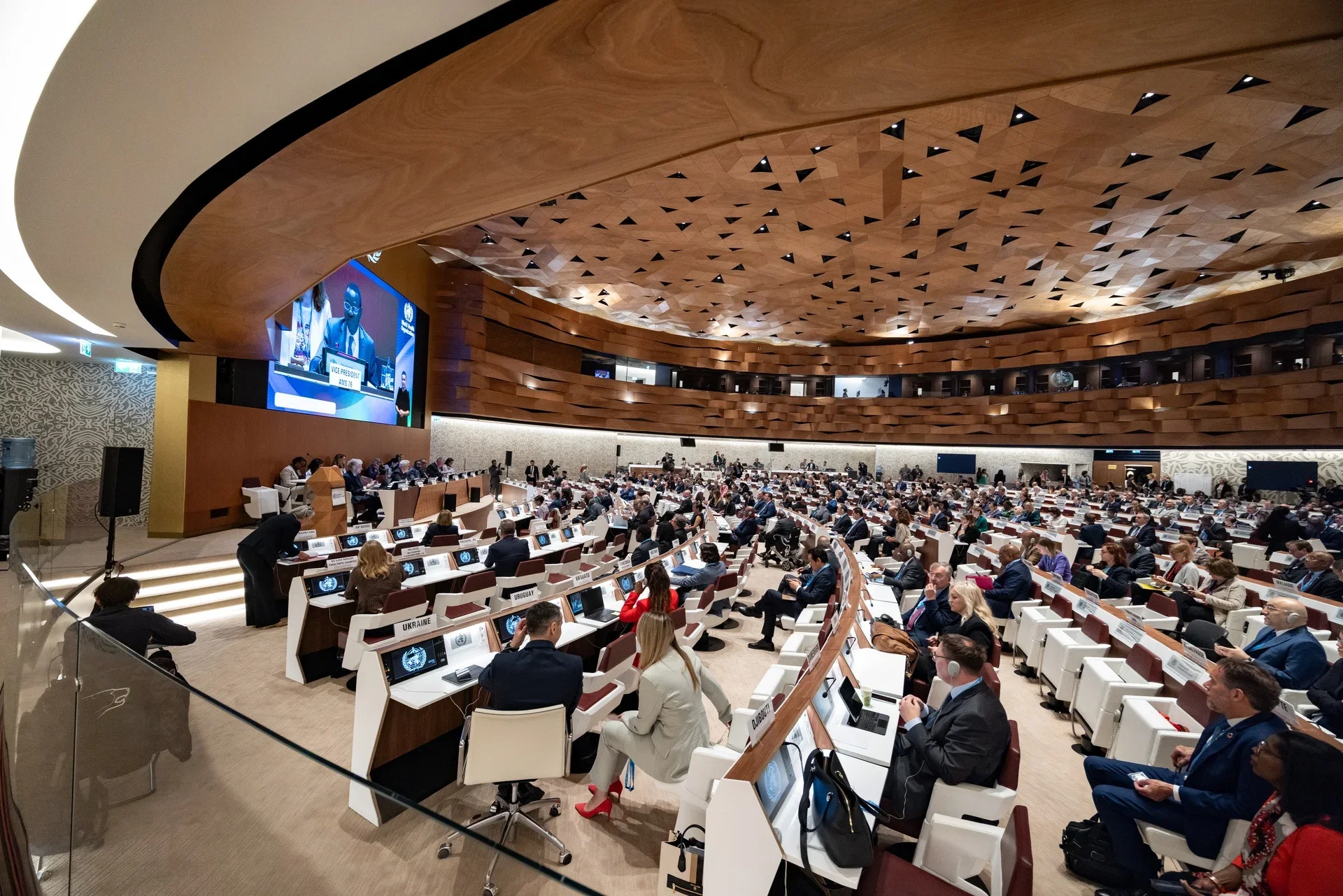
This week, 193 governments are gathered in Geneva for the 79th World Health Assembly. On Thursday, an official side event at WHO headquarters marks one year since that changed.
It called for earlier detection, integrated care, action on stigma, coordinated responses to shared risk factors, and a whole-person approach to lung health. Lung Cancer Europe advocated for it, publishing a position statement calling for governments to treat lung cancer as the public health priority it is.
Our Policy and Engagement Manager Michaela Regan is attending the UICC Lung Cancer Collaboration roundtable, convening policymakers and experts to discuss global policy alignment and what implementation has looked like in practice. Our Head of Operations Melanie De Coster and Project Manager Rebekka Aarsand will be al the official WHA79 side event on integrated lung health - where health ministers, researchers, and advocates will meet to work through what the resolution means in practice.
“I find this genuinely astonishing”
At Lung Cancer Europe’s inaugural conference in Vienna last month, our President Debra Montague said this:
“Lung cancer screening, which we know saves lives, which has a clear evidence base, which other cancer types have benefited from for decades, is still not scaling across Europe the way it should. I find this genuinely astonishing.”
The resolution reinforced the importance of earlier detection. The evidence base for risk-based low-dose CT screening is well established. England published five-year data from its national screening programme in Nature Medicine this month, showing what early detection at scale delivers. Across Europe, fewer than one in eight national cancer control plans include lung cancer screening or early detection. The gap between what is possible and what is happening is not a scientific problem. It is a political one.
The scale of what the resolution was responding to
The resolution also made commitments on integrated care, stigma, and the full human experience of living with lung cancer.
Our 10th and 11th Annual Reports, together the largest survey ever conducted on the mental health and wellbeing of people living with lung cancer in Europe, reached 2,204 people across 31 countries. The data shows what those commitments were responding to.
Nearly one in three people received no mental health support at any point in their care. Almost one in five had to find it themselves. Only 24% felt the emotional support from their healthcare team was completely sufficient.
89% experienced emotional difficulties after diagnosis. Social life, family life, and finances were all significantly affected. People described feeling abandoned, isolated, and unsupported.
This is what integrated, whole-person care is supposed to address. The resolution named it. The data shows how far most systems still are from delivering it.
Where things stand
Governments have referenced the resolution in national planning. Fewer have funded it or built the systems it calls for. EU budget conversations are putting existing commitments under pressure. The European Beating Cancer Plan, large-scale screening funding, the momentum built through the resolution: none of it is guaranteed.
Lung Cancer Europe co-organised a Call to Action event at the European Parliament in November 2025, bringing together EU policymakers, clinicians and patient advocates. That Call to Action has since been endorsed by Cancer Patients Europe, the Lung Cancer Policy Network, the European Health Management Association and MSD. We became full members of the EFPIA Patient Think Tank and of UICC. We are in these conversations because they have direct consequences for people with lung cancer across Europe.
What we need from year two
Lung cancer screening in funded national programmes, with equity at the centre. Not aspirations in cancer control plans. Programmes, with eligibility criteria, referral pathways, and workforce capacity, that reach the people most at risk.
Mental health and psychosocial support treated as a core part of lung cancer care. Our data shows the scale of unmet need. The resolution named stigma as a barrier. That is not enough on its own.
Financing that matches the ambition. The resolution exists. The evidence exists. Governments now need to act on both.
Lung Cancer Europe is the pan-European alliance of patient organisations representing people living with and affected by lung cancer across more than 27 countries.
Editor's update: 20 May 2026
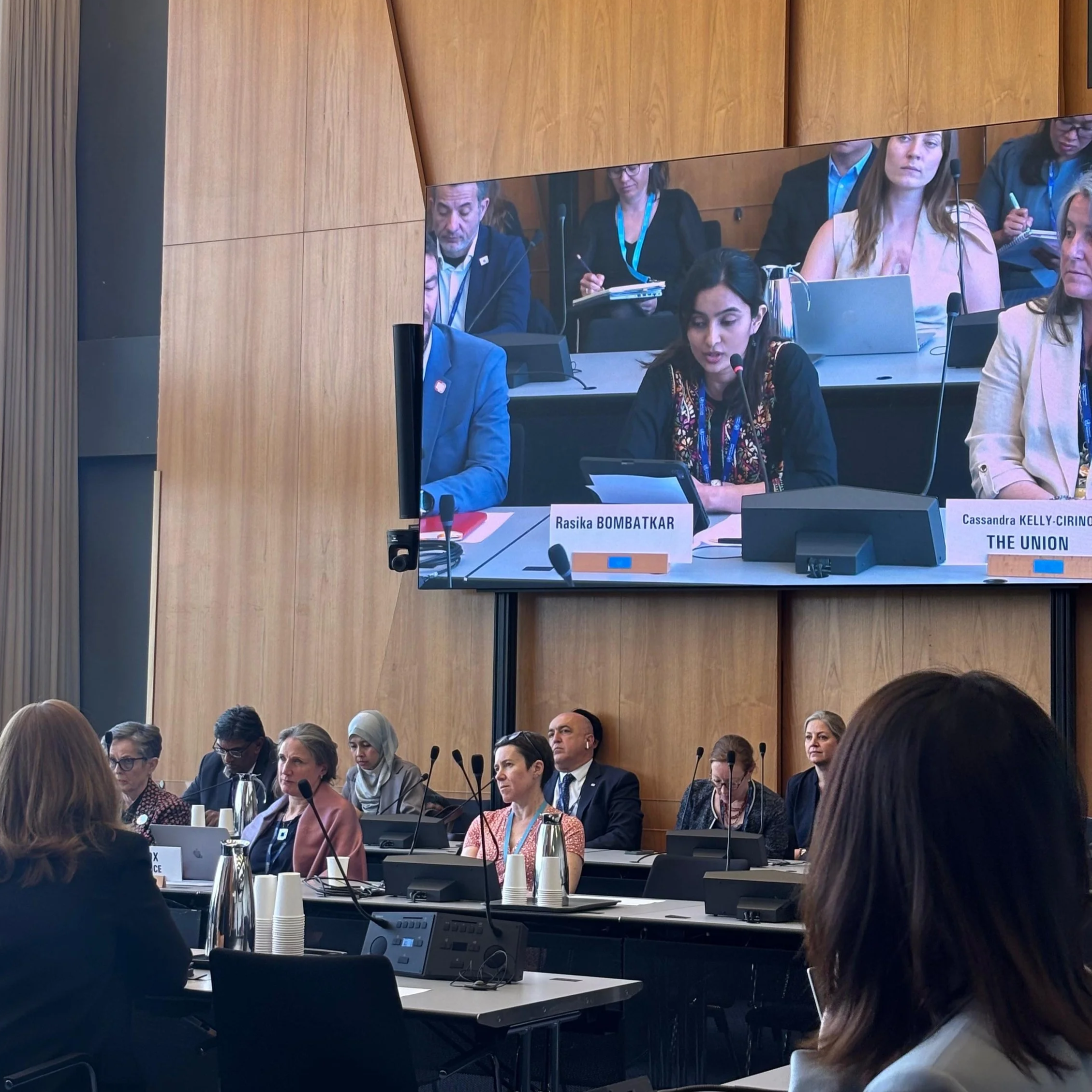
Lung Cancer Europe attended the official WHA79 side event on integrated lung health at WHO headquarters in Geneva. Among those speaking was Rasika Bombatkar, WHO Technical Advisor and lung cancer advocate, who was diagnosed with lung cancer at 26. She spoke about what it means to live with lung cancer - and argued that this is not a supplement to policy expertise. It is policy expertise.
The session was co-chaired by the Minister of Health of Malaysia and the Secretary of Health of the Philippines, with contributions from health ministers, researchers, and civil society from across the world. The message was consistent: the resolution exists, the political momentum is growing, but implementation remains the hardest part.
Lung Cancer Europe will continue to hold that commitment to account on behalf of the people living with lung cancer across Europe.