
The Right to Be Forgotten: Why Cancer Survivors Must Not Pay Twice
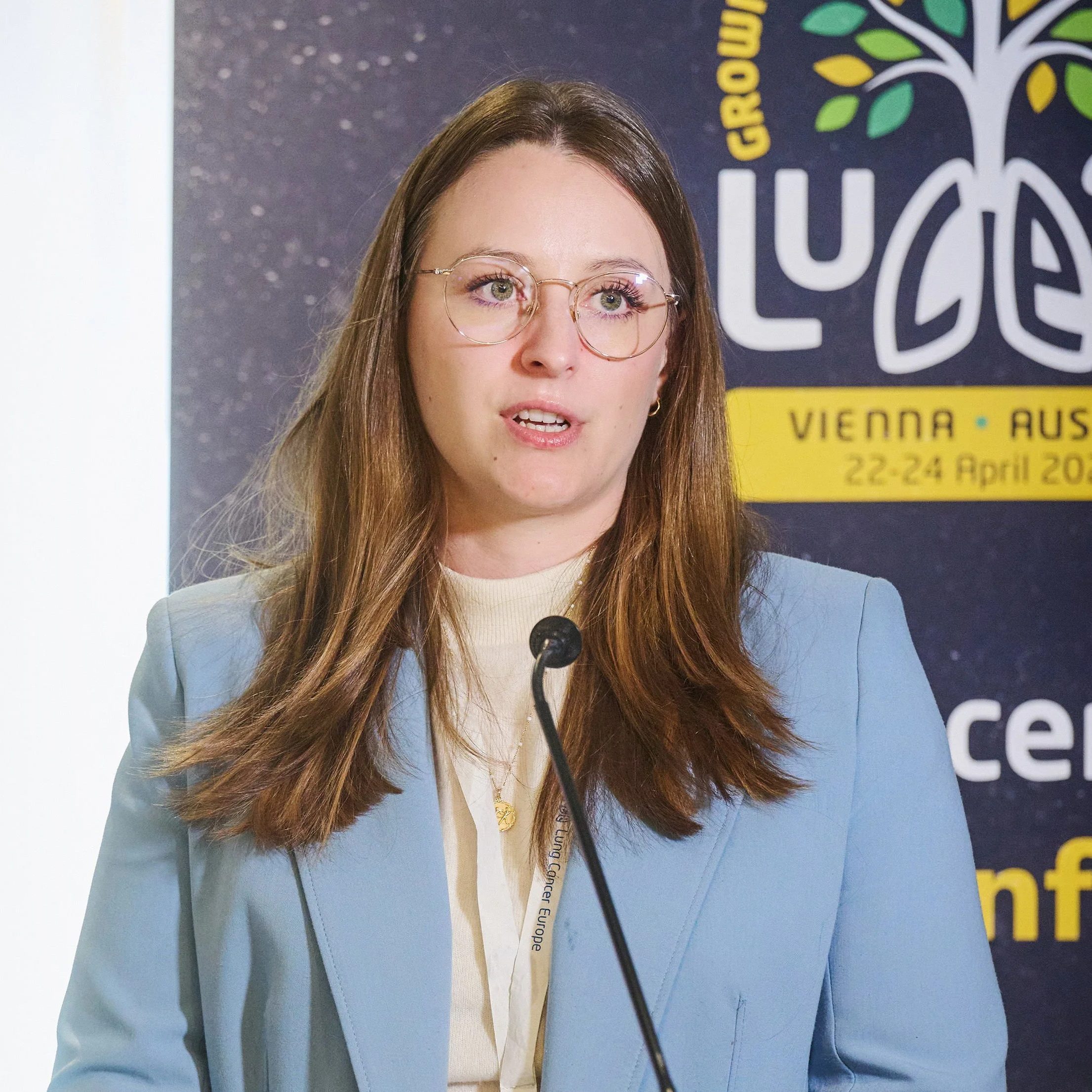
Kinga Wójtowicz, Director of Healthcare EU at RPP Group, on behalf of EDACS - Ending Discrimination Against Cancer Survivors
At Lung Cancer Europe's 1st Conference in Vienna last week, our members heard a powerful presentation from Kinga Wójtowicz, Director of Healthcare EU at RPP Group, on behalf of EDACS - Ending Discrimination Against Cancer Survivors. The session brought into sharp focus an issue that affects millions of people across Europe: what happens to cancer survivors when they try to access a mortgage, take out insurance, or plan their financial future?
The answer, for too many, is discrimination.
Cancer Is No Longer a Death Sentence - But Survival Has a Price
Thanks to decades of medical progress, cancer mortality has fallen significantly since 1980. More people are surviving cancer than ever before. Yet as Kinga's presentation made clear, survival must come with financial rights. Too often, it doesn't.
Cancer survivors across Europe face higher insurance premiums, rejected loan applications, and demands to disclose their medical history - long after they have been successfully treated. As EDACS frames it: cancer patients should not have to pay twice.
This is the problem the Right to Be Forgotten (RTBF) is designed to solve. After a defined period following the end of treatment - and in the absence of relapse - survivors are no longer required to disclose their cancer history when applying for financial products. Their past becomes, legally, forgotten.
The EDACS Initiative: Building Momentum for a Harmonised Framework
EDACS was founded by Prof. Dr. Françoise Meunier, Vice-President of the Belgian Royal Academy of Medicine, who has spent years driving this issue to the top of the European policy agenda. The initiative works across multiple fronts:
Policy engagement - collaborating with EU policymakers, MEPs, and national politicians to embed RTBF into health and consumer credit law
Public consultations - actively shaping RTBF legislation in individual countries
Network building - connecting advocates, legal experts, and patient organisations across Europe
International visibility - representing the issue at major health summits and in the media
Event organisation - including a High-Level Conference held during the Belgian Presidency of the Council of the EU in 2024
Key milestones already achieved include the inclusion of RTBF in Europe's Beating Cancer Plan (2021), the EU Mission on Cancer (2021), and the Consumer Credit Directive (2023). The remaining objective - harmonised, binding European legislation - is still to be secured.
Where Does Europe Stand Today?
The national picture is uneven, and that unevenness is itself part of the problem. As of early 2026:
10 EU Member States have dedicated legislation, with varying timelines and conditions: France, Belgium, the Netherlands, Malta, Portugal, Romania, Spain, Cyprus, Italy, and Slovenia. France was the first to act, back in 2016; Malta passed its law as recently as March 2026.
5 countries have voluntary agreements or codes of conduct in place instead of binding law: Denmark, Greece, Ireland, Luxembourg, and the Czech Republic.
12 countries have no protection whatsoever: Austria, Bulgaria, Croatia, Estonia, Finland, Germany, Hungary, Latvia, Lithuania, Poland, Slovakia, and Sweden.
Momentum is building in Ireland, Germany, Poland, and Luxembourg, but building momentum is not the same as having protection in law.
Waiting periods differ significantly across countries. Survivors in Belgium, France, and Spain benefit from a five-year rule; those in the Netherlands, Portugal, Italy, Cyprus, and Malta must wait ten years. Most countries offer shorter timelines for those diagnosed in childhood or early adulthood.
What Is Needed Now?
Kinga's presentation closed with a clear call to action. Progress requires:
Genuinely centring cancer patients' and survivors' unmet needs in policy discussions
Political will to adopt and enforce laws - at no cost to governments
Sharing and replicating best practices across member states, without reinventing the wheel or threatening insurers' liability
Long-term follow-up clinics with dedicated healthcare professionals to support survivors
How Lung Cancer Europe Members Can Engage
EDACS is an open network, and there are practical ways to get involved:
Share your country's experience with the RTBF landscape
Contribute to survivor testimonials
Use the EDACS website as a resource database
Stay connected to the initiative