
What Could a New Iron Discovery Mean for Lung Cancer Immunotherapy?
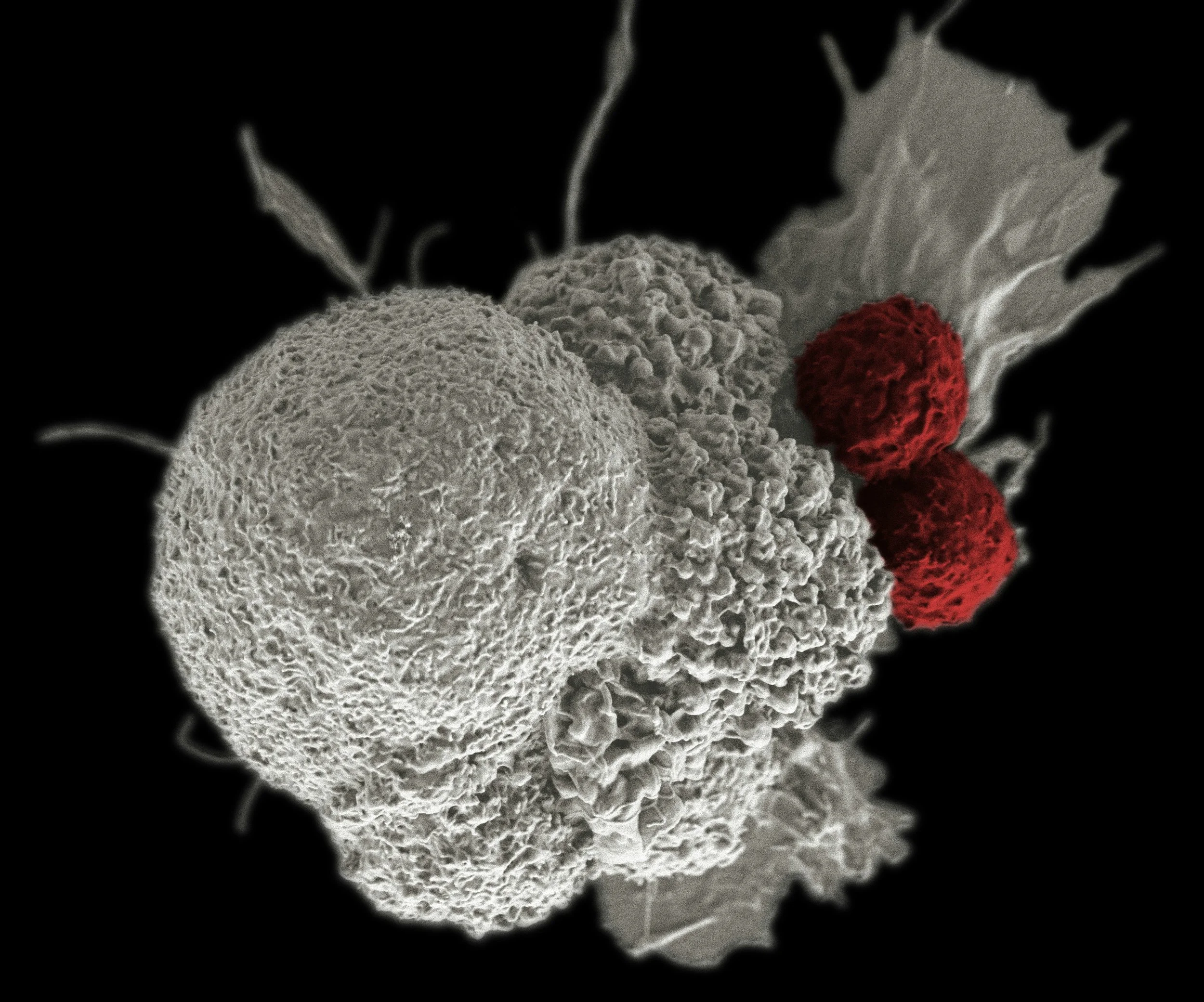
Image: National Cancer Institute
New research published in Nature Cancer has identified iron accumulation as a trigger for the destruction of CAR-T immune cells. We explore what this unexpected finding could mean for the future of lung cancer treatment.
Immunotherapy has transformed lung cancer treatment over the past decade. For some patients, it delivers responses that last years. But for many others, treatment eventually stops working and the reasons are not always clear.
New research published this week in Nature Cancer points to a surprising and largely overlooked factor: iron.
The discovery
The study, led by researchers at Zhejiang University in China, focused on CAR-T cell therapy - a form of immunotherapy in which a patient’s own T cells are genetically engineered to seek out and destroy cancer cells. CAR-T therapy has produced remarkable results in blood cancers, but responses are often not durable.
By analysing blood samples from patients with multiple myeloma and acute lymphoblastic leukaemia at multiple time points after CAR-T infusion, the researchers identified a consistent pattern. After an initial period of rapid expansion, CAR-T cells entered what the researchers describe as a “diminution phase” - a period of sharp decline. During this phase, the cells showed clear signs of a specific type of cell death called ferroptosis.
Ferroptosis (from the Latin ferrum, meaning iron) is a form of cell death driven by iron-dependent oxidative damage. When iron accumulates inside a cell, it triggers a chain reaction that oxidises fats in the cell membrane, ultimately destroying it from within. The researchers found that elevated iron levels in the bloodstream after CAR-T infusion were directly linked to this process and that people with higher iron levels before treatment had worse outcomes.
The ACSL4 finding
The most significant discovery from a treatment perspective centres on a gene called ACSL4. This gene produces an enzyme that incorporates certain fats into cell membranes - - fats that are highly susceptible to iron-driven oxidative damage. The more ACSL4 activity, the more vulnerable the cell becomes to ferroptosis.
Iron does not just modestly increase ACSL4 activity. It activates the enzyme through a process called phosphorylation, essentially switching the ferroptosis programme on. When the researchers used CRISPR gene-editing technology to delete ACSL4 from CAR-T cells, those cells became highly resistant to iron-induced death, retained their cancer-killing function for longer, showed less exhaustion, and produced more durable tumour clearance in animal models - without triggering dangerous inflammatory side effects.
Importantly, the researchers also tested this in a solid tumour model, not just blood cancer. ACSL4-knockout CAR-T cells showed dramatically improved performance against solid tumours, with complete remission rates nearly tripling compared to standard CAR-T cells. This is the finding that makes the research relevant beyond the specific cancers studied.
What this could mean for lung cancer
The clinical data in this study comes from blood cancers, and it would be inaccurate to suggest the research directly demonstrates an effect in lung cancer. But the biological mechanism it uncovers is relevant across cancer types and particularly worth considering in the context of lung cancer immunotherapy.
The tumour microenvironment in lung cancer is known to be iron-rich. CD8+ T cells, which checkpoint inhibitor therapies such as pembrolizumab depend upon, face the same fundamental ferroptosis vulnerability identified in this research. The study shows clearly that exhausted CD8+ T cells are specifically the most susceptible to iron-induced death and T cell exhaustion in the lung cancer tumour microenvironment is one of the central challenges in improving immunotherapy outcomes.
None of this constitutes proof that iron is undermining lung cancer immunotherapy. But it opens a genuinely important question: if iron accumulation can destroy engineered immune cells in blood cancers, and if the same mechanism operates in solid tumours as this research suggests, what role might iron biology be playing in the lung cancer tumour microenvironment?
What could change in practice
The researchers identified two practical approaches that improved outcomes in their models. The first was treating CAR-T cells with a ferroptosis-blocking drug called ferrostatin-1 during the manufacturing process before infusion. The second, and more durable, was the genetic deletion of ACSL4 in the CAR-T cells themselves.
There is also an intriguing finding around baseline iron levels. Those with higher serum ferritin and iron concentrations before treatment showed a trend toward worse outcomes. The researchers are careful to note this needs testing in larger cohorts, and that serum iron is influenced by many factors including chemotherapy and inflammation. But it raises the possibility that monitoring iron levels could one day form part of treatment preparation.
Looking ahead
This research does not immediately change treatment for lung cancer. CAR-T therapy is not yet standard in lung cancer, and the clinical findings here are specific to blood cancers. But the biological mechanism it uncovers - iron accumulation driving immune cell death through ferroptosis - is relevant across cancer types, and the solid tumour data suggests it deserves serious attention from researchers working in this space.
For those developing the next generation of immunotherapies for lung cancer, this study adds a new target to the map. Engineering immune cells that can resist ferroptosis, or identifying patients whose iron biology makes them particularly vulnerable to treatment failure, could meaningfully improve outcomes.
The discovery that something as fundamental as iron metabolism can determine whether an immune cell lives or dies and therefore whether a treatment works, is a reminder of how much complexity still lies beneath the surface of cancer biology.
Read more
The following open-access papers provide further context on the science behind this research:
Note: currently available as an unedited manuscript ahead of final publication.
CD8+ T cells regulate tumour ferroptosis during cancer immunotherapy - Nature, 2019
Single-cell CAR T atlas reveals type 2 function in 8-year leukaemia remission - Nature, 2024